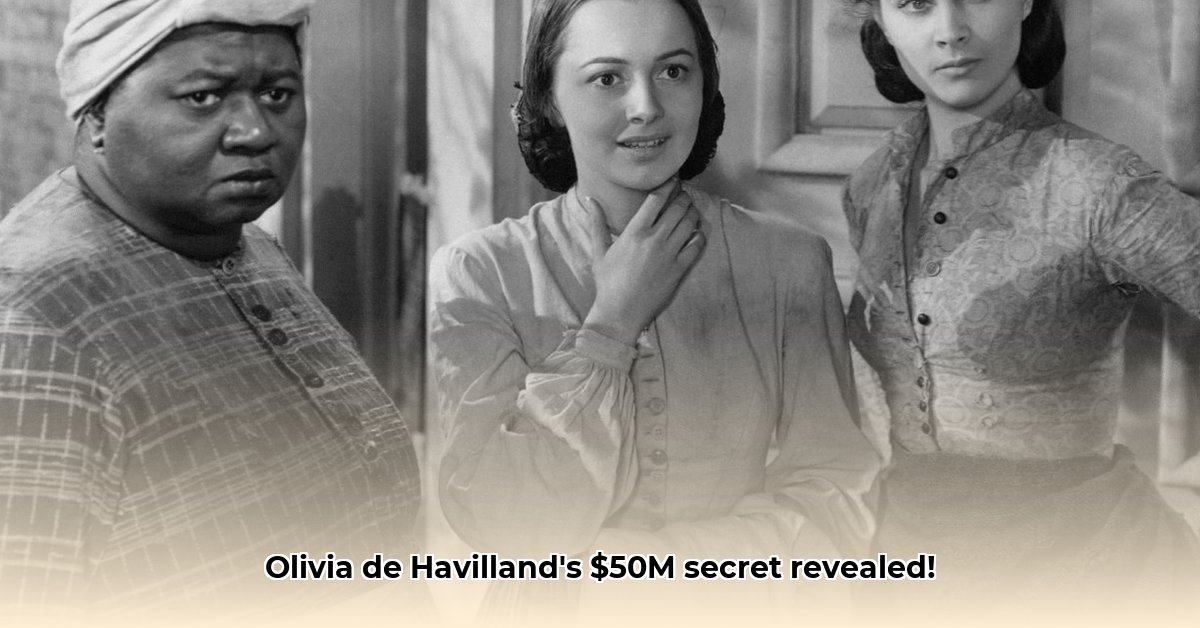
Olivia de Havilland's name is synonymous with classic Hollywood. Two Oscars, iconic roles in films like Gone With the Wind, and a legal battle that changed the landscape of the film industry—her legacy is undeniable. But the estimated $50 million she left behind has sparked intrigue, shrouding her final act in a mystery as captivating as her career. How was this substantial fortune distributed? The answer, frustratingly, remains elusive.
A Legacy Forged in Film and Legal Victories
De Havilland's career was a testament to talent and determination. Her portrayal of Melanie Hamilton in Gone With the Wind remains a cinematic touchstone. Her two Academy Awards for Best Actress further solidified her place in Hollywood's pantheon. These achievements, coupled with shrewd financial management over decades, undoubtedly contributed significantly to her substantial wealth. However, her financial success is intertwined with her groundbreaking legal victories.
The "De Havilland Law": A Turning Point
In a pivotal moment in Hollywood history, de Havilland challenged the restrictive contracts imposed by Warner Brothers. Her successful legal battle, often referred to as the "De Havilland Law," significantly altered the power dynamic between studios and actors, granting performers greater control over their careers and, consequently, their earnings. This legal victory arguably laid the groundwork for her significant financial independence. It is reasonable to assume that the control she gained over her career directly impacted how much she was able to earn and accumulate throughout her lifetime. But it was more than just financial gain; it was a fight for a fundamental change in the power balance of Hollywood.
The $50 Million Question: An Unrevealed Estate
The lack of public information surrounding the distribution of de Havilland's $50 million estate is remarkable. While some speculate that this secrecy is a deliberate measure to protect the privacy of her beneficiaries, others posit that the complexity of her holdings or ongoing legal processes prevents disclosure. Regardless of the reason, the absence of transparency only serves to heighten the intrigue surrounding this final chapter of her extraordinary life. The exact nature of her assets—real estate, investments, personal effects—remains unknown, fueling further public speculation.
Family Dynamics and the Fontaine Factor
De Havilland's famously strained relationship with her sister, Joan Fontaine, further complicates the narrative. Their highly publicized rivalry, a constant presence throughout their lives, begs the question: Did this complex familial dynamic influence the allocation of her estate? While some might speculate on the possibility of a reconciliation reflected in the will, the absence of concrete evidence prevents any definitive conclusions.
A Legacy That Endures
Olivia de Havilland's impact extends far beyond her financial legacy. Her performances continue to captivate audiences, and her legal battles paved the way for future generations of actors. The mystery surrounding her estate adds a final layer to her complex and fascinating story. Her remarkable life serves as a reminder that even the most celebrated figures retain an element of the private, leaving behind questions that remain unanswered. What is clear, however, is that her contribution to cinema and the legal rights of actors constitutes a lasting testament to a life both extraordinary and intriguing.
Key Takeaways:
- De Havilland's $50 million estate remains largely a mystery, concerning its distribution.
- Her "De Havilland Law" significantly impacted Hollywood's power dynamics between stars and studios.
- Speculation surrounds the role of her complex relationship with her sister, Joan Fontaine, in estate distribution.
- Her legacy extends beyond her finances; her contributions to film and actor's rights endure.
- This ongoing mystery underscores the complex balance of public persona and private life.